
#Articles
Dry Eye Syndrome: When Discomfort Becomes Chronic
.png)
A minor discomfort can become chronic when ignored for too long.
A common and silent condition. Dry eye syndrome is one of the most common eye conditions and, at the same time, one of the least understood by the general public.
In simple terms, dry eye syndrome is a disorder of the ocular surface in which the eyes do not produce enough tears, or the tears are not of sufficient quality to keep the eyes hydrated, lubricated and protected.
Behind this medical explanation, many patients experience a progressive loss of comfort, concentration and performance. Most concerning of all, they minimize the problem for so long that by the time they visit us, they have already come to regard the discomfort as normal.
Listening to your eyes is also part of taking care of your well-being. Although often underestimated, dry eye is not a minor temporary discomfort. It is a chronic condition that can worsen over time if not treated properly.
Modern lifestyles play a major role. In our clinical practice at UOC, we have observed that dry eye syndrome is linked to several factors:
Age is one of the main factors: tear production decreases as we grow older.
Women, especially after menopause, are also more susceptible because of hormonal changes.
Environmental and lifestyle factors include prolonged screen use, constant exposure to air conditioning, dry climates, cigarette smoke and frequent contact lens use.
Autoimmune diseases such as Sjögren’s syndrome, rheumatoid arthritis and even diabetes may also be behind the problem.
Dry eye does not usually announce itself with dramatic signs, but with discomfort that recurs every day. At UOC, we remind patients that these symptoms should not be ignored when they become part of the daily routine. They are signs of a real problem that needs attention:
A gritty or foreign-body sensation in the eyes
Burning, stinging or itching
Frequent eye redness
Blurred vision, especially after reading or using screens
Paradoxically watery eyes as a reflex response to irritation
Eye fatigue at the end of the day
Sensitivity to light
Treatment is not just an eye drop; it is a comprehensive solution. If symptoms persist for more than a few days, if you constantly use artificial tears without improvement, or if you notice an impact on your vision or quality of life, it is time to see an ophthalmologist. A clinical evaluation can determine whether dry eye is present and, most importantly, identify its specific cause. Not all dry eye is the same, so treatment must be individualized.
Treatment for dry eye syndrome has advanced considerably in recent years. Today, a broad range of tools can significantly improve patients’ quality of life.
Preventing complications and restoring visual comfort is possible with an accurate diagnosis and personalized treatment. We increasingly see patients who, after years of living with these symptoms, discover that a solution is available.
ABOUT UNIDAD DE OFTALMOLOGÍA Y CATARATA (UOC)
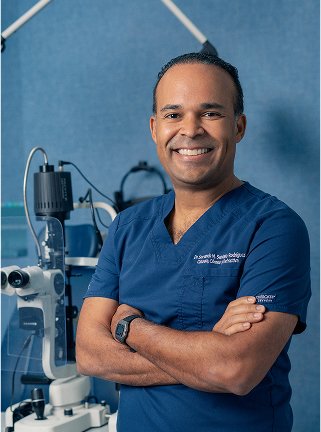
Unidad de Oftalmología y Catarata (UOC) is a comprehensive ophthalmology center specializing in cataract surgery. For over 15 years, under the leadership of Dr. Servando Santana Rodríguez, we have delivered exceptional eye care through medical excellence, advanced technology and internationally recognized standards.
This article is part of UOC’s editorial collection, created to educate and raise awareness about eye health and help improve quality of life in the Dominican Republic.