
#Articles
Diabetes Can Take Away Your Sight

For World Diabetes Day on November 14, Unidad de Oftalmología y Catarata in the Dominican Republic calls for greater awareness and prevention of this disease.
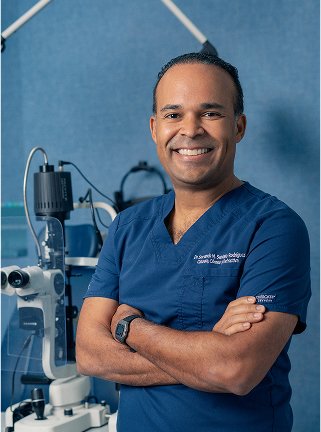
By Dr. Audrey Juan, ophthalmologist specializing in retina and vitreous, and Dr. Servando Santana, ophthalmologist specializing in cataract, cornea and refractive surgery.
Santo Domingo, Dominican Republic, November 2024. Diabetes mellitus is one of the world’s most common chronic diseases, and its prevalence has increased significantly in recent years. According to the latest studies conducted in the Dominican Republic, 13.45% of the country’s population had diabetes in 2024.
One of the most serious and devastating complications of diabetes—often unnoticed until it is too late—is diabetic retinopathy. If not detected promptly, this eye disease can lead to irreversible vision loss.
Diabetic retinopathy is the leading cause of blindness among working-age people worldwide. It affects the retina, the layer of light-sensitive cells at the back of the eye that sends visual signals to the brain. In people with diabetes, high blood glucose can damage the retina’s small blood vessels, causing fluid leakage, bleeding, vessel blockage, abnormal vessel growth and retinal detachment. As the disease progresses, vision loss may become irreversible.
The main risk factors include having diabetes for many years, poor blood glucose control, high blood pressure, high cholesterol and smoking. The longer a person has diabetes, the greater the risk of eye complications.
Prevention
One of the best ways to prevent diabetic retinopathy is to maintain proper blood glucose control through a healthy diet, regular exercise and strict adherence to medical guidance. Blood pressure and cholesterol must also be controlled.
In its early and intermediate stages, diabetic retinopathy produces no visual symptoms. A person may therefore have significant changes requiring treatment without noticing any difference in vision. This is why annual dilated eye examinations by qualified professionals are essential: they allow timely detection and treatment before vision is permanently affected.
Common treatment options include laser photocoagulation, intravitreal medication injections and retinal surgery. Evidence shows that treatment in early stages significantly reduces the long-term risk of vision loss.
Always consult a specialist
Only an ophthalmologist can diagnose diabetic retinopathy after a dilated fundus examination. Additional tests may include fluorescein angiography—in which a vegetable-based dye is injected into a vein in the arm before a special camera takes multiple images to identify damaged retinal vessels—or optical coherence tomography (OCT), which examines the layers of the macula at the center of the retina. If treatment is required, the patient should see a retina and vitreous specialist qualified to perform these procedures.
The Dominican Republic has advanced technology for diagnosing and treating diabetic retinopathy. The greatest challenge, however, remains the lack of early diagnosis.
Prevention is the safest path to avoiding serious complications such as blindness. Early diagnosis and timely treatment are key to preserving long-term vision.
People with diabetes or a family history of the disease should not wait for symptoms to appear. An ophthalmology visit at least once a year is recommended. Eye health is essential to maintaining a good quality of life.